


I’ve written a lot about belonging. My work provides a map and compass to find our way into the felt experience of it, because I think belonging matters. In fact, I think it’s central to every dilemma we face in our personal lives and our world at large.
My view is based on a definition of belonging that the Wheel of Wisdom helps me see, feel, and practice. It reflects two words that make up the word belong:
be—to exist or be present,
and
long—to extend a great distance, as in lifelong; also, a strong wish or desire, as in longing.
Existence itself is powered by a mysterious, inexplicable desire, a longing that we cannot fully know or apprehend.
As I’ve come to see it, belonging begins the moment something comes into being and extends until the strong desire that brought it into being is somehow fulfilled.
What changes if everything belongs?
Seen this way, belonging is not the result of fitting in with a particular style or group, or with a certain mode of thinking, feeling, or behaving. It’s not a judgmental or moral proclamation. We don’t belong due to our faith or status. We belong because we exist.
The perspective that everything belongs recognizes that some aspects of life appear to nurture or revere the mystery of existence, and some aspects of life appear to diminish or denounce the mystery of existence.
It’s certainly my intention to support life, yet my words and deeds have both nurtured and diminished it. This is part of being human. Nurturing doesn’t make us good, and diminishing doesn’t make us bad. We are far more complex.
When I’m stuck in the binary trap of good vs. bad, it’s difficult for me to see or acknowledge the kindness of people who do harm. It can be equally difficult to see or acknowledge the harm done by people who are kind. Either-or thinking keeps me from seeing a fuller spectrum of reality.
If I’m willing to see and honor life’s complexity, I become aware that all truths are partial truths. Every individual perspective reflects some degree of truth, yet none expresses the Whole Truth.
Consider what might change if we treated all people and situations as if they exist to fulfill a hidden longing within life’s sacred wholeness.
When we act as if everything belongs, we create an opening for something new.
One example of living as if everything belongs comes from longtime peace activist Louis Vitale. On one particular day, when Vitale and his group arrived at a nuclear testing site to engage in non-violent protest, they were met by a row of police officers defending the site against trespass. Vitale kindly approached their line and informed the officer in charge that the group was there to protest and many of them were prepared to be arrested. Vitale then asked if the officer had requests of them.
Grateful to be asked, the officer wondered if the protestors would be willing to refrain from going limp (becoming “dead weight”) when they get arrested. He explained that having to lift and carry limp protesters doesn’t prevent arrest, but it does hurt police officers’ backs.
Vitale saw no value in vilifying or penalizing police officers. The protest was meant to expand minds and hearts, not narrow them. So, although the protestors did disobey police orders by crossing the line of trespass, they did not go limp or otherwise resist arrest.
The arrests happened. Nuclear testing was not stopped. Yet seeds of hate were not sown. Othering did not rule the day. In fact, there was surprising cordiality between the officers and protestors, and we don’t know what ripple effects that might have created.
Of course, this one instance of practicing inclusion does not account for all the chaotic and often violent complexities in our world. What it does do is model an embodied attitude that allows something unexpected to emerge.
If you want to go fast, go alone. If you want to go far, go together.
~ African proverb
Living as if everything belongs may seem impractical or impossible. Inclusion will require immense patience. It will slow us down. But we will not know what radical inclusion makes possible until we relinquish the habit of exclusion.
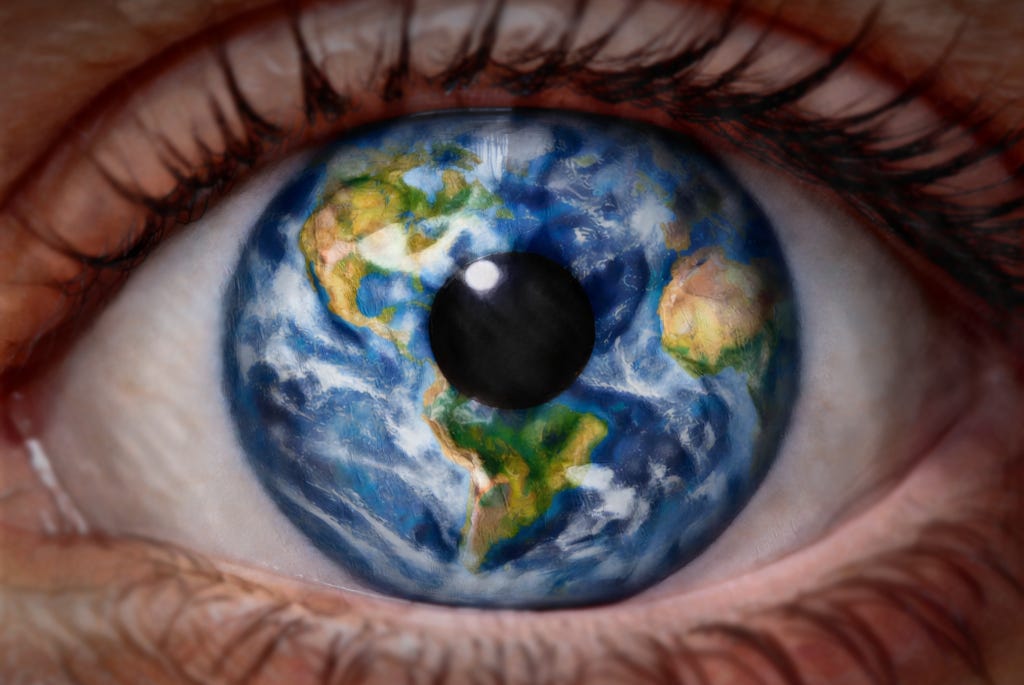
Consider the marvel of parallax vision. When the physical act of seeing involves two eyes, the left eye views the world from one perspective and the right eye views it from a slightly different perspective. When these points of view come together, a new perspective is possible—vision expands and depth is perceived. Depth adds complexity.
To see through the eyes of belonging is to include life’s depth and complexity. That presents challenges, and it also gives rise to new realities.
Perceiving belonging is a lifelong practice.
Humans are well-practiced at fighting, shaming, and trying to vanquish whatever we deem unacceptable—perhaps especially, parts of ourselves. In doing so, we overlook life’s preciousness. When we see through the eyes of belonging, life’s preciousness is savored.
Of course, some aspects of life are vastly more challenging to include than others. Seeing this way requires practice. I’m suggesting it’s a lifelong practice. One that is worthy of heart, mind, will, and spirit—and honors the sacredness of being.
My practice begins by connecting to my own felt sense of belonging. The Wheel of Wisdom has helped me map that inner territory, so it’s now easier to find my way. When I actually feel my own belonging, my energy is aligned with the current of life, and something besides outrage, handwringing, and bypassing becomes possible.
By stepping into a practice of presence and radical inclusion, we step out of the anguished history of exclusion, and create an opening for the future to emerge.
The future will arise in the field of belonging. That’s why belonging matters.
The future begins within us.
Beyond our sensory experiences of separateness and our binary notions of “right” and “wrong” there is an inclusive field in which the future is possible. When we can navigate our own sense of alienation and find our own way back into the field of belonging, it becomes possible to meet others there. We might be the first to show up, but our presence will invite others to join us there.
my favorite line..."Consider what might change if we treated all people and situations as if they exist to fulfill a hidden longing within life’s sacred wholeness." and forgiveness becomes a moment to moment act!